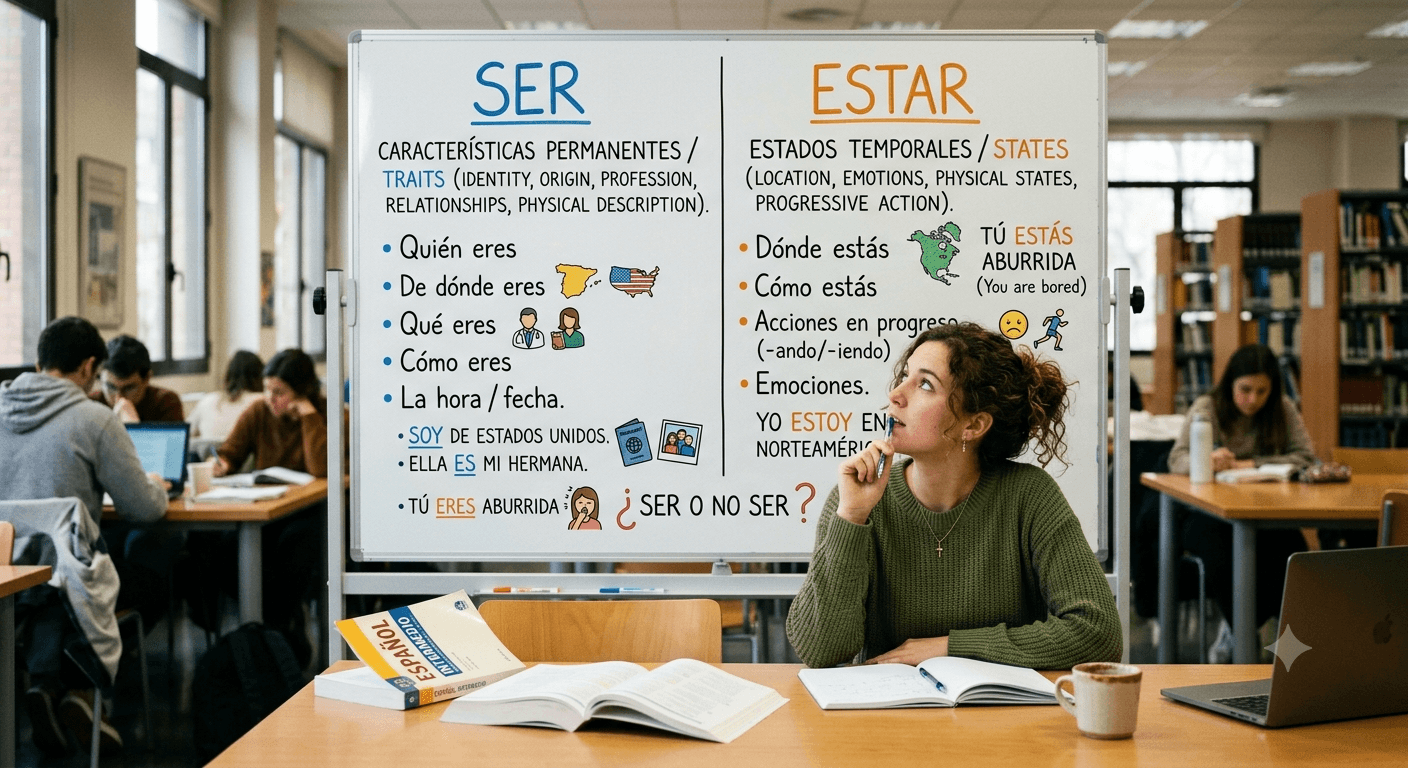
Did you know that Spanish is spoken by nearly 600 million people worldwide? According to the Cervantes Institute (2024), it’s the fourth most spoken language globally, after English, Mandarin, and Hindi. Additionally, it’s the second language with the most native speakers, only behind Mandarin.
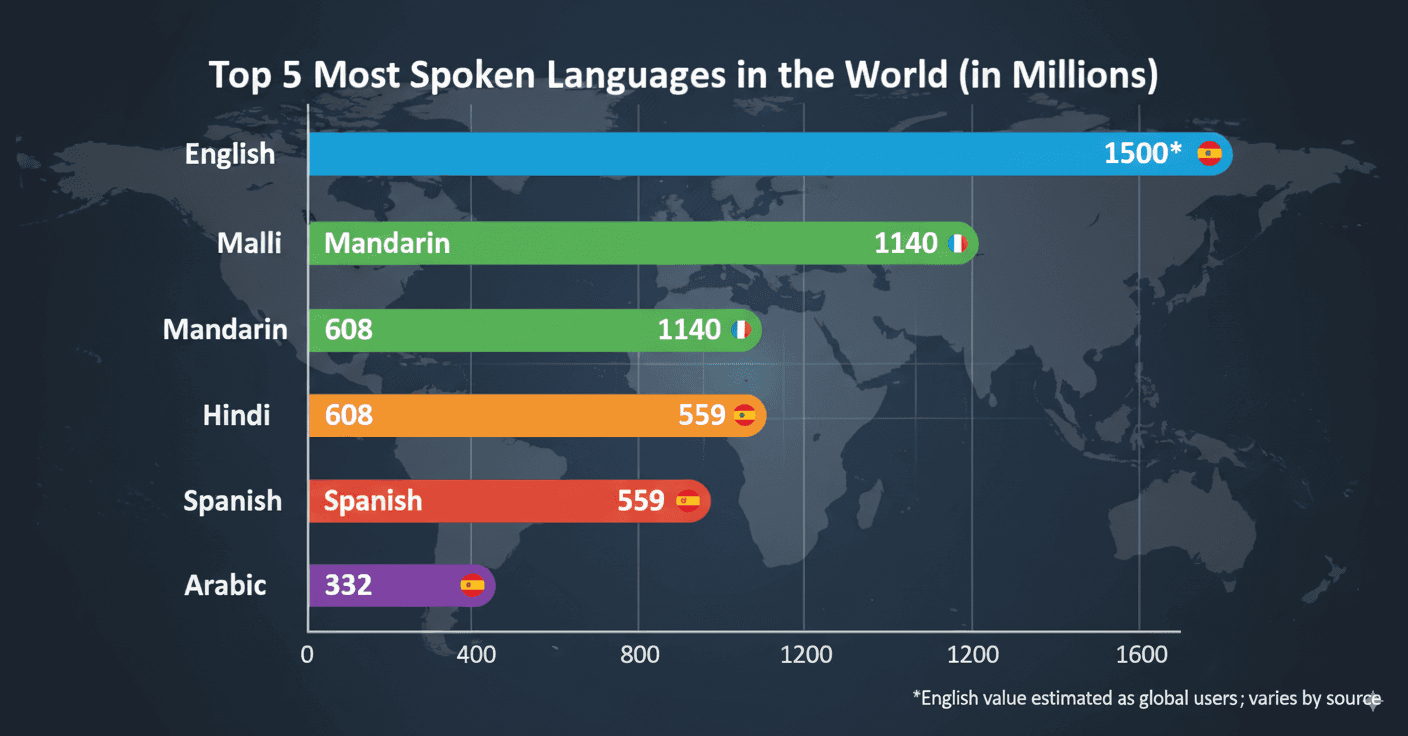
Table 1. Most spoken languages in the world in millions of speakers.
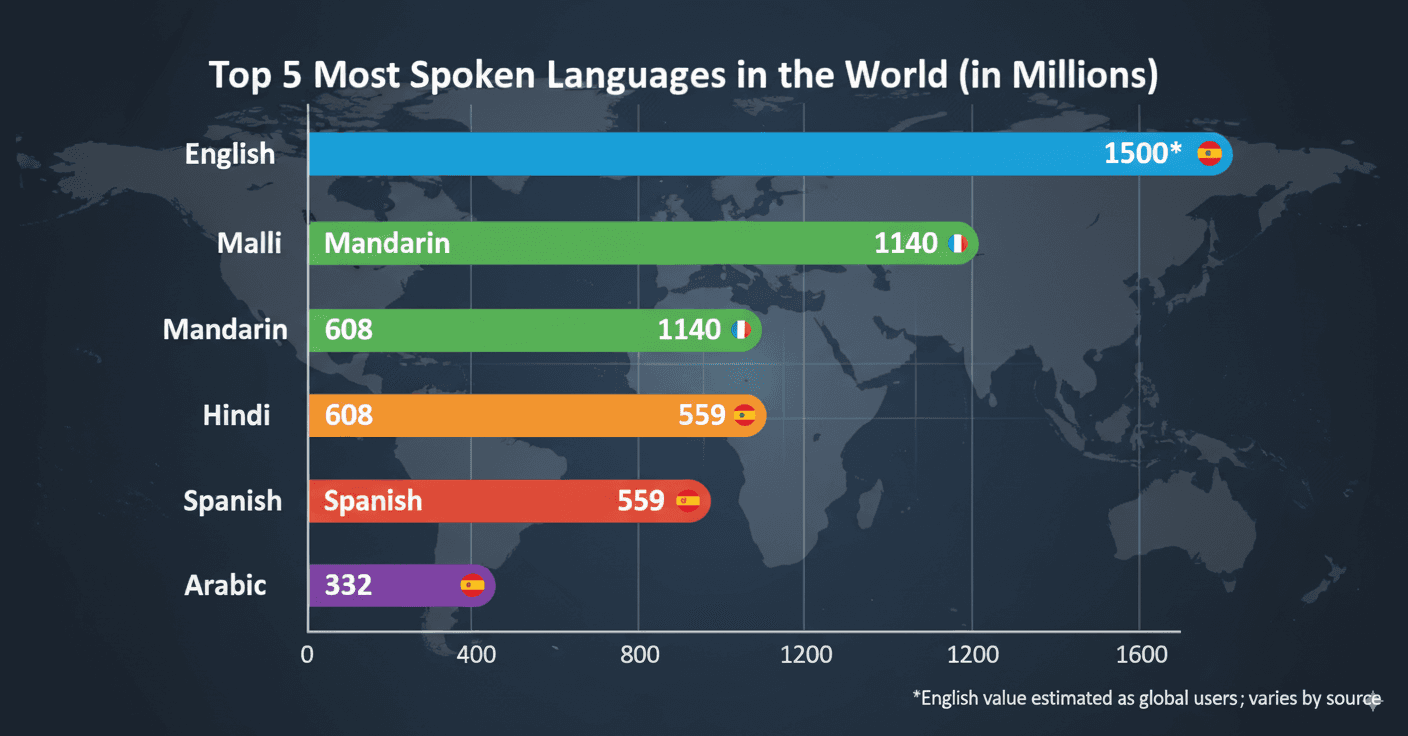
Table 2. Languages with the most native speakers in millions of speakers.
But how is this linguistic reality experienced in the United States? Although it may seem surprising, over 350 different languages are spoken in the U.S., and according to the 2023 census (United States Census Bureau) (see table 3), Spanish ranks second among the most spoken languages, surpassed only by English, followed by Chinese, Tagalog, Vietnamese, Arabic, French, Korean, Portuguese, and Russian.
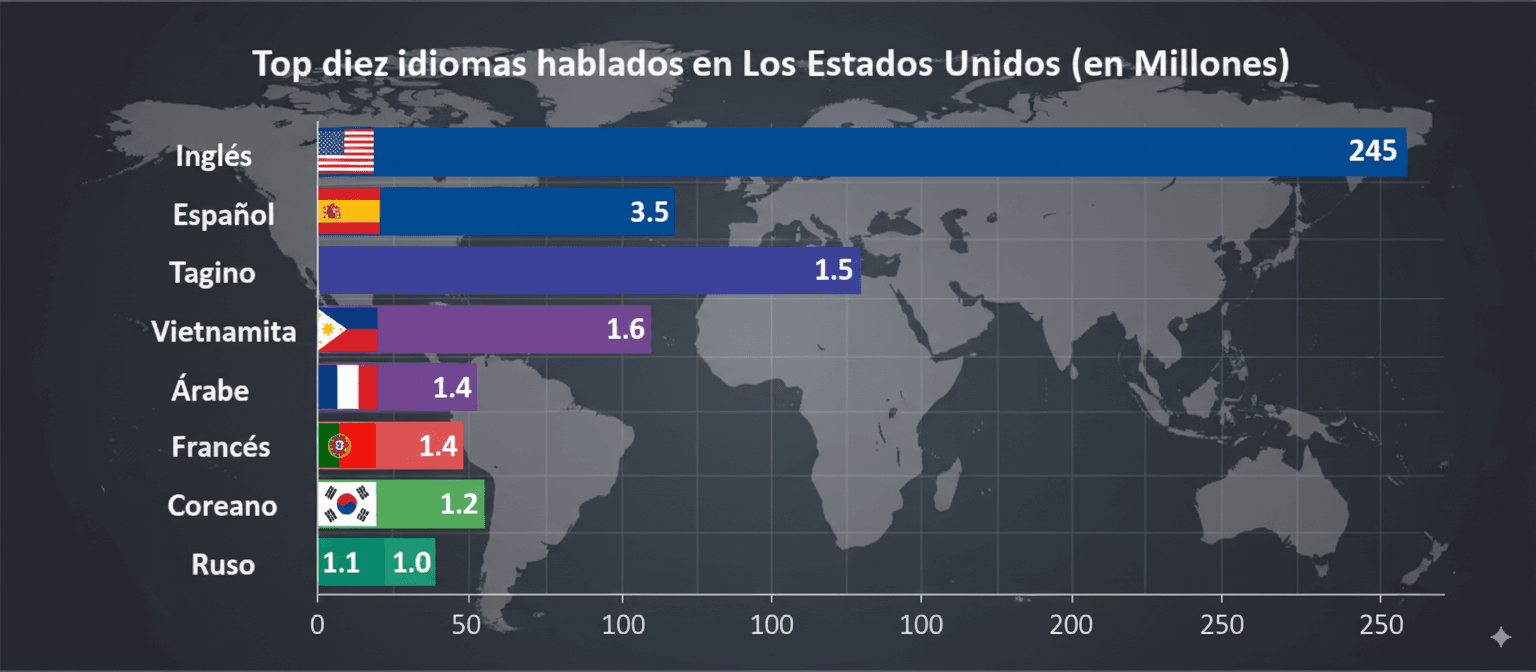
Table 3. Most spoken languages in the United States
Spanish in the United States: A Growing Force
I’m sure you’d like to know, what is the relevance of Spanish in the United States? And the figures will fascinate you because according to data from the American Community Survey (ACS) (ACS, 2023), more than 65 million people in the U.S. identify as Hispanic or Latino, representing 19.4% of the total population, that is, one in every five people. Of that total, more than 43 million are native Spanish speakers and another 15 million speak it as a second language; likewise, according to the U.S. Census Bureau in the ACS (2022a) (See figure 1), Spanish is spoken in 13.3% of American households.What we’ve said above allows us to understand the strong presence that Spanish has in the United States, where it’s estimated that by 2050 it will be the country with the most Spanish speakers in the world, even surpassing Mexico; furthermore, it’s expected that the Hispanic population will reach 132.8 million and that at least 30% of them will use Spanish as their mother tongue.This solid and growing presence confirms that Spanish is not only relevant, but is deeply rooted in the country’s daily life and that its use is increasingly noticeable every day.
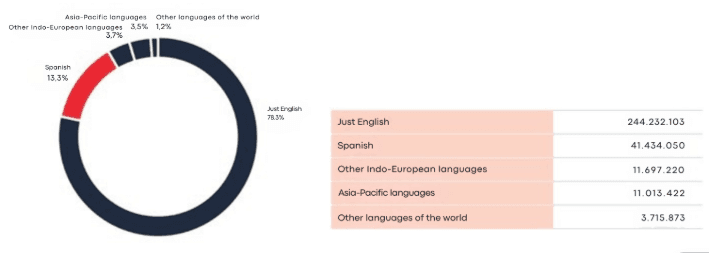
Figure 1. Languages spoken in United States households. Source: U.S. Census Bureau (2022a)
States with the Most Spanish Speakers
Now you might wonder, where in the United States are there more Spanish speakers?The answer is very interesting because states like New Mexico, California, Texas, and Arizona that were part of Mexico before becoming U.S. territory, currently have the highest percentage of Hispanic or Latino population (Table 4), although California, Texas, Florida, New York, and Illinois are the states with the most Hispanic or Latino people (Table 5). So don’t be surprised every time you hear names like San Diego or Los Angeles, because they remind us of the cultural and historical heritage of their settlers' origins.
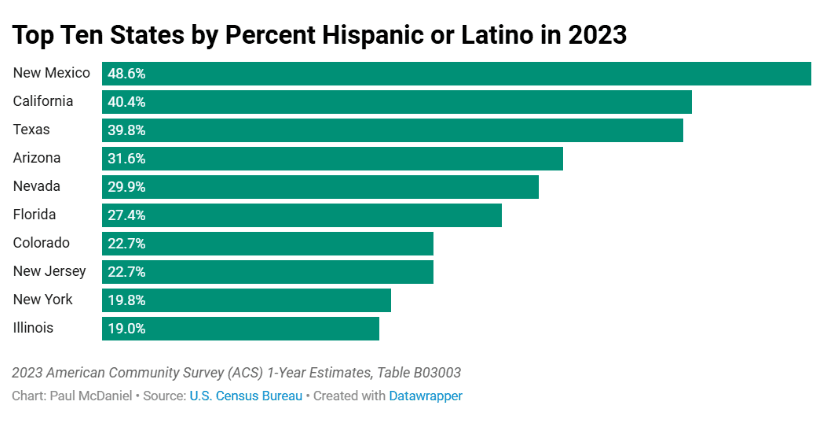
Table 4. Top 10 states with the highest percentage of Hispanic or Latino population in 2023.
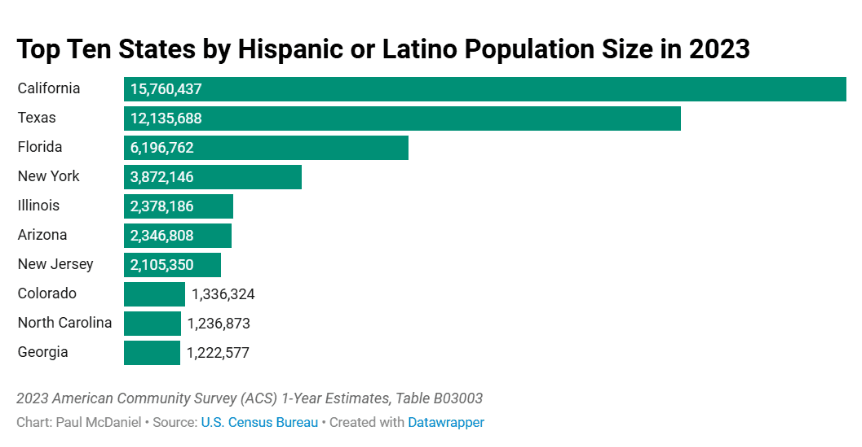
Table 5. Top 10 states with the largest Hispanic or Latino population in 2023.
Additionally, in the map of figure 2, with data from 2020, you can observe how the Hispanic population is concentrated especially in the southwestern United States, on the border with Mexico, and in urban centers of high density and cultural diversity, thus reflecting the history and current migratory dynamics.
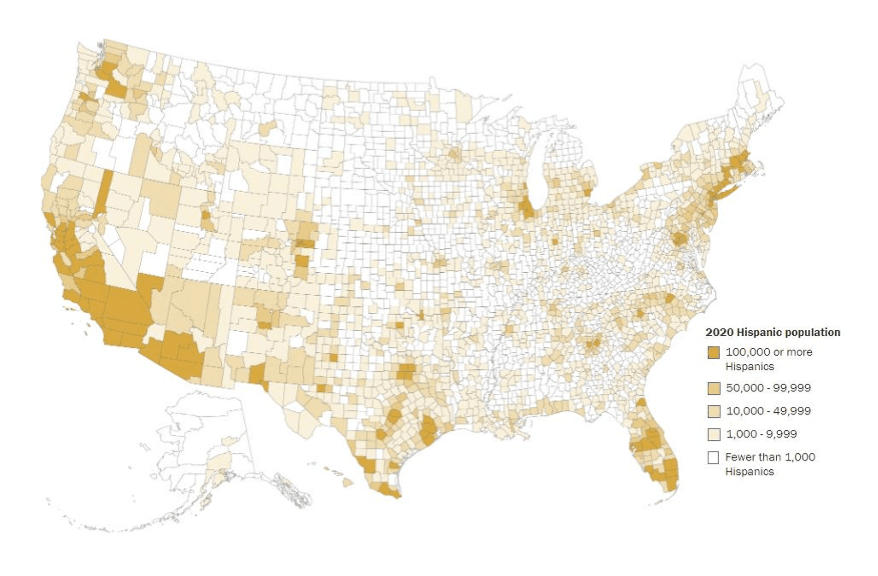
Figure 2. Distribution of Hispanic or Latino population in the United States of America based on 2020 census data. (Pew Research Center 2022).
Reasons to Learn Spanish
And the most important question you might have would be, Why learn Spanish? Below, I’ll give you some data to motivate you to learn this wonderful language.
1. More and more people are learning Spanish worldwide, and the United States leads the global ranking of Spanish students.
Spanish is booming. According to Fernández (2024), an expert from the University of Alcalá, more than 23 million people study Spanish as a foreign language in 111 countries. And the United States leads this movement with more than 7.9 million students (see table 5). Additionally, the Cervantes Institute estimates that this figure will exceed 24 million in 2025, and could reach 682 million potential users in 2066, at different levels of competence.
Don’t get left behind and start studying Spanish! Because it’s spoken more and more every day in the United States.
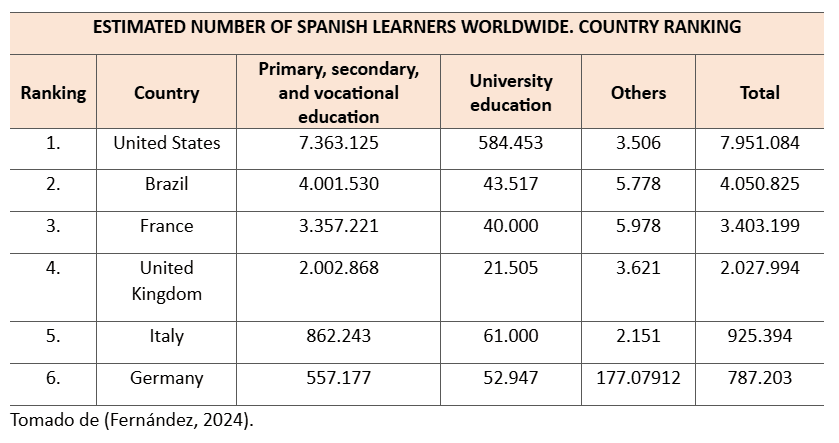
Table 5: Ranking of the number of Spanish students worldwide.
2. Learning Spanish is easier than you think.
Although English has Germanic roots, it shares much vocabulary with Spanish due to the influence of Latin and French, especially after the Norman conquest of Great Britain during the 11th century (Baugh & Cable, 2012; Crystal, 2003; Ostler, 2005). That’s why words like 'important' or 'correct' are so similar in both languages because they share the same origin.Additionally, Spanish is a phonetic language: it’s pronounced as it’s written, making it an accessible language for beginners. You don’t need to learn a new alphabet, and once you master the sounds, reading and speaking become much easier. Although Spanish grammar can present challenges when studying its grammatical structures, verb conjugations, and noun genders; it has consistent, predictable patterns that are easy to understand with practice (Trask, 1996), and as McWhorter (2011) points out, the more you listen to a language, the easier it becomes. This statement leads us to the third point.
3. You have access to a huge amount of written and audiovisual content in Spanish.
Consuming cultural content is one of the most effective and entertaining ways to learn a language. You can do it by watching movies or series, listening to music or podcasts, reading books, among others; fortunately, the Spanish offering is immense and grows every day. For example, you can delve into hundreds of Latin rhythms like reggaeton or salsa, discover interesting novels by authors like Gabriel García Márquez, or venture into successful series like La Casa de Papel. Additionally, you can do it from the comfort of your home with any mobile device through internet pages or streaming applications; or if you live in a country like the United States where millions of Latinos and Hispanics live, you could practice it daily while meeting people and interacting in cultural events of their folklore; this way I assure you that language learning will accelerate naturally.
Spanish is everywhere, you just have to take the first step on a journey of learning and discovery that will take you to places and scenarios you never would have imagined.
4. Job Opportunities.
The United States is a country that houses diverse companies, among them, there are a large number of companies and workers of Latin American or Hispanic origin in different sectors of the economy that are experiencing significant growth each year and with it, increasing the number of jobs. According to Arledge (2024), the U.S. Census Bureau revealed that in 2021 around 7.1% of the 5,681,118 businesses in the United States were Hispanic-owned, around 406,086. In 2022 the number of Hispanic-owned businesses was 465,202 experiencing growth at an average annual rate of 7.7%, exceeding the growth rate of 0.46% of all non-Hispanic employer businesses in the U.S. (Donoghoe et al., 2025).Additionally, Fernández (2024) highlights that the Hispanic community is contributing significantly to the economic growth of the United States, because in 2022, the nominal GDP generated by Hispanic Americans reached $3.6 trillion (Hoffman & Jurado, 2023). Likewise, Fernández states that between 2010 and 2021, the GDP generated by the Hispanic community grew 2.5 times faster than that of the non-Latino population of the United States.
5. Cognitive Benefits
- Bilingualism improves working memory and enhances mental flexibility
- Strengthens key brain networks that help us solve complex problems more efficiently
- In young adults, speaking two languages reduces the mental effort required to switch from one task to another
- In children, early learning of a second language helps develop better attention
Learning Spanish not only connects you with a new culture and opens job doors: it also trains your brain to think better, faster, and with more focus.
Learning Spanish is no longer just an advantage: it’s a necessity in an increasingly interconnected world. In the United States, where the Hispanic population continues to grow strongly, mastering this language can open doors in education, employment, culture, and social life.
If you’re thinking about which language to learn, Spanish is a safe bet. It’s not only practical and useful, it’s also a window to a vibrant, diverse, and expanding world.
Bibliography
Arledge, R (2024). A Profile of the Nation’s Hispanic-Owned Businesses. United States Census Bureau. Link: www.census.
Baugh, A. C., & Cable, T. (2012). A History of the English Language (6th ed.). Routledge.
Central Bureau of Statistics (2023). Population by most spoken language (in private households). Link: senso.cbs.cw.
Central Bureau of Statistics (2023). Population projections. Link: cbs.aw.
Park, Ji., Weismer, S. Kaushankava, M. (2018). Changes in executive function over time in bilingual and monolingual school-aged children. Dev Psychol. psycnet.apa.
Crystal, D. (2003). The Stories of English. Penguin Books.
Fernández, D. (2024). Spanish: A Living Language. Lengua Viva ISBN: 978-84-129329-1-1
Donoghoe, M., Stephens., H. Khan., F. Perry, A. (2025). Charting the surge in Latino or Hispanic-owned businesses in the US. Link: www.brookings.
Hoffman, D. & Jurado, J. A. (2023). 2023 LDC U.S. Latino GDP Report». Beverly Hills: Latino Donor Collaborative (LDC). Link: lattitude.
Instituto Cervantes (2024). El Español en el Mundo. Anuario del Instituto Cervantes 2024. ISBN: 978-84-18210-56-3
McDanield, P (2024). Mapping the U.S. Hispanic Population for Hispanic Heritage Month. Link: pnmcdaniel.medium.
McWhorter, J. (2011). What Language Is: And What It Isn’t and What It Could Be. Gotham Books.
Oficina del Censo de los Estados Unidos (2022a). American Community Survey. DP02. Selected Social Characteristics in the United States. Link: data.census.
Anderson, J. Grundy, J. Grady, C. Craik, Fergus. Bialystol, E (2021). Bilingualism contributes to reserve and working memory efficiency: Evidence from structural and functional neuroimaging. Neurobiology of Aging, 97, 10-24. doi: 10.1016/j.neuropsychologia.2021.108071.
Ostler, N. (2005). Empires of the Word: A Language History of the World. Harper Perennial.
Pew Researhc Center (2022). Hispanic Population Growth and Dispersion Across U.S. Counties, 1980-2020 Link: www.pewresearch.
Trask, R. L. (1996). Historical Linguistics. Arnold Publishers.
Ward, R., & Awani, J. (2024). Bilingualism and flexibility in task switching: A close replication study. Studies in Second Language Acquisition, 46(4), 996-1012. doi.